
About Us
About Cyber Tech Integration: hands-on IT leadership with a service-first mindset.
Cyber Tech Integration is a North Haledon MSP focused on the everyday places technology slows people down: user support, devices, Microsoft 365, cloud access, security hygiene, backup readiness, and AI adoption. The company turns those moving pieces into a support relationship clients can understand and rely on.
Mission
Turn scattered technology work into a support relationship with visible ownership.
That means fewer mystery handoffs, documented next actions, and technical guidance tied to how the client actually works, buys, grows, and manages risk.
Service Model
Help desk, endpoint care, cloud administration, security routines, automation, and planning connected in one relationship.
The value is not just the service list. It is the way everyday fixes, risk reduction, and future planning stay tied together.
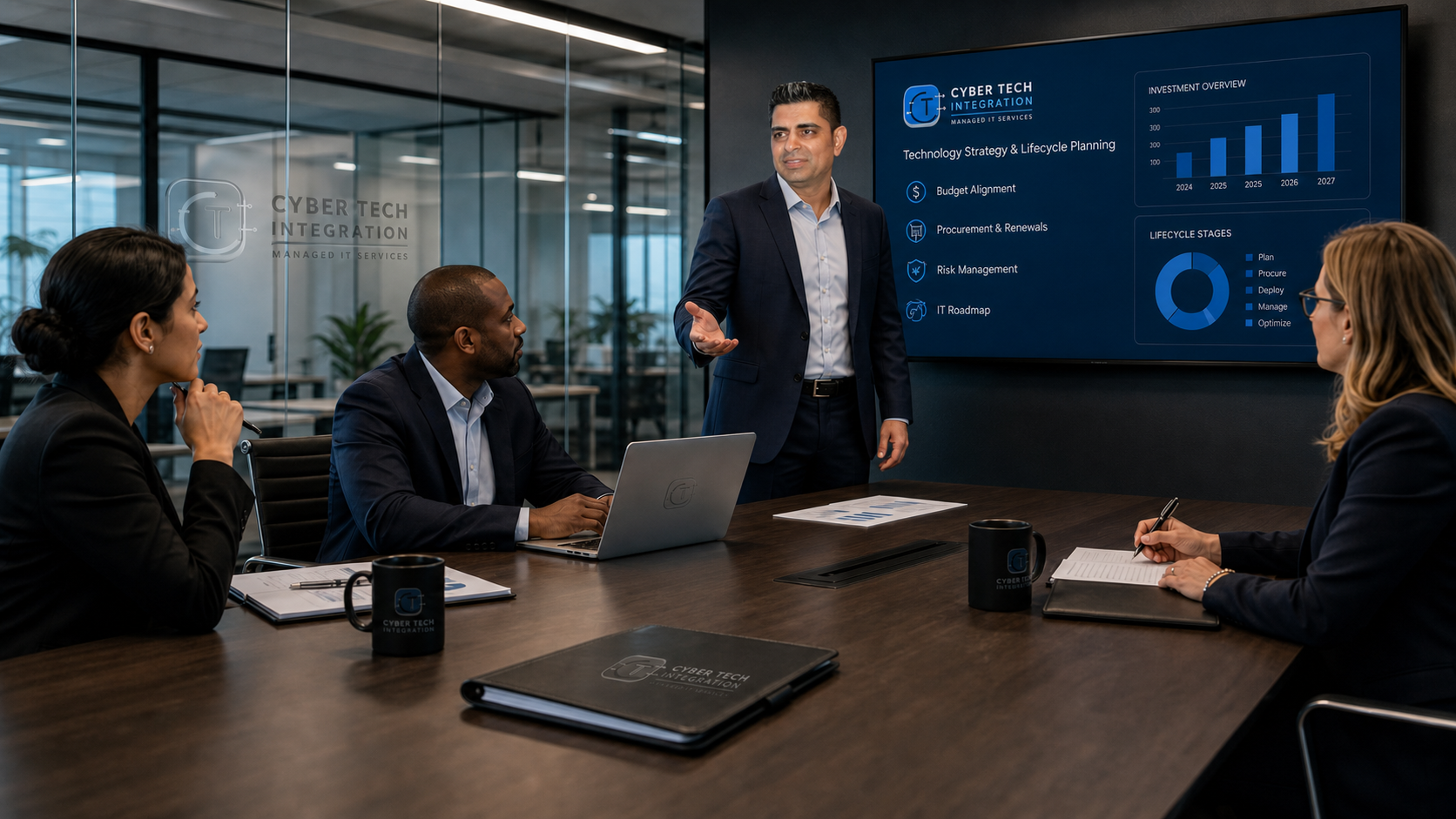
Built for the messy middle of real business IT.
Users need help, leaders need visibility, and systems need care. Cyber Tech Integration connects those needs without pretending one tool solves everything.
Working Style
Built around service habits that clients can actually feel.
Cyber Tech Integration is designed to be approachable for users while still giving leadership useful visibility into support quality, risk, platform health, and upcoming priorities.
Principle
Ownership Before Tools
We start by clarifying responsibility, priorities, and communication before recommending another platform or quick fix.
Principle
Plainspoken IT
Support updates, risks, and roadmap decisions should be understandable to business leaders, not only technical staff.
Principle
Security In The Workflow
Protection works best when it is part of everyday help desk, device, identity, backup, and cloud routines.
Principle
Future-Ready, Not Hype-Driven
AI, automation, and cloud changes are evaluated against real workflows, data exposure, user adoption, and the support effort required after launch.
Company Focus
Focused on clients who need technology support to feel less scattered and more accountable.
The company brings together frontline support, endpoint care, Microsoft 365 administration, cloud access, cybersecurity routines, backup awareness, AI enablement, and advisory guidance for organizations tired of disconnected decisions.
A straightforward path for users who need help and leaders who need visibility.
A service model that connects daily support with security and future planning.
A careful approach to residential, business, and public-sector conversations.
Commitment
Local Relationship
North Haledon presence with regional coverage for clients that need responsive remote support plus planned on-site coordination across NJ, NYC, CT, PA, and nearby markets.
Commitment
One Front Door
A single intake path for users, homeowners, leadership teams, and technical stakeholders so requests do not disappear between vendors, platforms, and internal owners.
Commitment
Careful Public Intake
Government and contractor conversations are welcomed with clear boundaries around sensitive, regulated, or procurement-related information.
What Clients Can Expect
The relationship is meant to feel organized from the first conversation.
Cyber Tech Integration focuses on useful intake questions, realistic prioritization, working documentation, and recommendations shaped around the client instead of forcing every environment into the same package.
Expectation
Responsive Support Culture
Tickets should be acknowledged, routed, documented, and followed through so clients can see who owns the issue and what changed.
Expectation
Operational Discipline
Service work is organized around standards, repeatable checklists, asset visibility, and reporting that can survive staff turnover and growth.
Expectation
Technology That Fits
Recommendations are matched to the environment, budget, risk level, user base, and operating pressure instead of being forced into a preset package.
Next Step
Want to see whether Cyber Tech Integration is the right fit?
Start with a conversation about what is working, what is creating friction, and what your technology environment needs to support next.